Friday, 28 August 2009

How smart is your dog?


British Columbia -- Dogs' mental abilities are equivalent to a 2- or 2.5-year-old child, according to psychologist and canine researcher Stanley Coren, PhD, of the University of British Columbia.

The author of numerous books on dogs, including The Modern Dog and The Pawprints of History: Dogs and the Course of Human Events, presented his findings at the American Psychologists Association's 117th annual convention Aug. 8.

In an interview with DVM Newsmagazine, Coren explained that he adapted communication tests used for nonverbal children. He found the average dog understands 165 words, gestures, signs and signals. The most intelligent breeds understand up to 200 or 250. "Over 15,000 years or more, humans have been systematically modifying dogs so they're better at understanding us," he says. "If I point at something, a dog will look at what I'm pointing at. A wolf raised in the wild who sees me point will look at my hand."

Coren also used data from more than 200 dog-obedience judges to figure the relative intelligence of different breeds, developing a top-seven list. Border Collies came first, followed by Poodles, German Shepherds, Golden Retrievers, Dobermans, Shetland Sheepdogs and Labrador Retrievers.

Scientists have realized that consciousness is not an "on-off switch," Coren says, and that dogs fall on a continuum of sentience with humans and other animals. This understanding benefits future researchers who won't be studying blind. "Psychologists interested in the emotions of dogs can ask, what emotions does a 2-year-old have? Fear, anger, happiness, surprise, but not complex emotions like guilt," he says.

Some of dogs' developed abilities cater especially to humanity's hunting interests, Coren says. With the start of the Ice Age, large prey were scarcer, and hunters found themselves needing to use bow and arrow to catch smaller animals. Dogs were invaluable in finding, catching and retrieving wounded prey. At first, hounds sniffed out prey for hunters without long-distance weapons. With the development of the slow-reloading musket, hunters used setters to quietly find, point at prey and freeze for a close shot. Later, setters were used in pairs to improve trajectory from a distance.

When hunting rifles really improved, relatively undisciplined spaniels were sent into fields and marshes to frighten birds into flight and into range. Today, Coren says, one of the best dogs for hunters with multiple-shot shotguns is the Nova Scotia Duck-tolling Retriever. It bounds up and down the edges of a lake or field, acting erratically. Birds will move to get a view of the dog's crazy movements, putting them in the hunter's sights.

The future of dog breeding, however, will lie more in the world of companion animals, Coren says. Breeds like the Coton de Tulear are "little pieces of empathy. That dog resting on a sofa makes a whole lot of friends," he says. Future research into the health benefits of owning dogs will be Coren's focus. "We know that elderly or socially isolated people with dogs need less medical services and live longer," he says. "Dogs are going to have a newer niche there."


Why (and what) is my senior dog "leaking"?


"My 11 year old female, spayed dog was laying peacefully on the floor. When I bent down to pet her, I discovered a puddle of liquid on the floor under her hindquarters. It did not smell of urine, but there was a very mild odor and it was clear. I lifted her tail to see where it could have come from and it seemed to come from her vagina. The opening seemed very expanded, but not dilated. Her appetite is good and her bowel functions are fine. Is this an age-related issue or something requiring immediate medical attention?"

Answer: It may be both of the problems you mentioned; age-related and something requiring medical attention. Without going into major canine anatomy, the female dog has one urogenital opening, commonly referred to as the vulva. Both the urethra and vagina open in a common area, called the vestibule, which then opens to the exterior what you see as the vulva (actually the labia).

As dogs age, urinary incontinence can result, especially in females. This is most likely what you are seeing in your dog, although an examination by your veterinarian is still in order to confirm.

In an age-related incontinent dog (versus a congenital problem), muscles and sphincters aren't as "tone" as they once were, and urine leaks a bit into the common vestibule area. The urine may pool there, causing a "dilated" appearance. This stalled urine can lead to localized infections and may ascend up into the bladder, causing a urinary tract infection. As the dog gets up/lays down, a small pool of urine may be released.

In addition to loss of tone in the urogenital system, diseases such as diabetes or kidney problems often lead to increased urination (and thirst), exacerbating the urine pooling and potential urinary tract infection problem.

I would recommend making a geriatric exam appointment with your vet for a physical exam, to check the urine, and bloodwork to make sure that there aren't any other disease issues to deal with.

Hopefully, this is a case of "simple" incontinence and can be managed medically.

For more information, here is a good article from Washington State University Veterinary School:
Urinary Incontinence

Standard disclaimer: anytime that your pet is not well, not eating, can't urinate or defecate, is painful or "leaking" something, please call your veterinarian immediately. This FAQ is not meant to diagnose or treat your pet; this can only be done with physical examination and proper veterinary care .

Tobacco Plants Yield First Vaccine For Dreaded 'Cruise Ship Virus'

The new vaccine is unique in its origin — it was "manufactured" in a tobacco plant using an engineered plant virus. Researchers are enlisting plants in the battle against norovirus, swine flu, bird flu, and other leading infectious diseases. This plant biotechnology opens the door to more efficient, inexpensive ways to bring vaccines quickly to the public, especially critical in times when viruses mutate into unpredictable new strains, said Charles Arntzen, Ph.D., who reported on the topic today at the 238th National Meeting of the American Chemical Society (ACS).

"The recent outbreak of H1N1 influenza virus has once again reminded us of the ability of disease-causing agents to mutate into new and dangerous forms," Arntzen points out. "It will be at least six months until a vaccine for this new strain will be available, and it will take even longer to create large stock piles of vaccine. For a case like the H1N1 influenza virus, you want to be able to move very rapidly and introduce a commercial vaccine in the shortest possible time. We think we have a major advantage in using engineered plant viruses to scale-up vaccine manufacture within weeks instead of months."

Noroviruses are always mutating, making it a moving target for vaccine developers. Arntzen says this has presented an obstacle for big pharmaceutical companies who might have considered developing a vaccine. Production costs can skyrocket when a single disease may frequently require new vaccines that must be developed and tested for safety and effectiveness. As a result, vaccines do not exist for many diseases that sicken enormous numbers of people each year. Arntzen notes that plant biotechnology could create a cheaper, quicker vaccine manufacturing technique uniquely suited to combat mutating viruses like norovirus and the flu.

Norovirus temporarily disables its victims, giving them severe diarrhea or nausea for up to three days. While not as life-threatening as the flu, Arntzen says it is equally important.

"It essentially closes down wings of hospitals, schools, day care centers and homes for the elderly. In the case of the military, it can shut down an entire ship and delay military operations while there is a cleanup in process. Because the disease spreads so rapidly, the major economic consequences are caused by the disruption of normal daily life and commerce," says Arntzen.

Norovirus will continue to evolve new strains, so Arntzen's team designed a vaccine manufacturing process quick enough to keep up with it and other shape-shifting viruses.

"With plant-based vaccines, we can generate the first gram quantities of the drug and do clinical tests within eight to 10 weeks… We could easily scale that up for commercial use in a two to four month period," explains Arntzen.

Plant-based vaccine production also offers cost advantages. Building greenhouses is more cost effective than the sterilized facilities, expensive manufacturing technology and stainless steel tanks required for the insect or mammalian cell cultures used in most traditional vaccines.

"The other cost advantages relate to vaccine purification and formulation. Purification from plant extracts is simpler because there are no infectious agents to clean up. There are no viruses in plants which can infect humans, so you don't have to worry about viral removal," notes Arntzen.

The team re-engineered plant viruses to produce high levels of specially designed "virus-like" nanoparticles in tobacco plants. At about 25 nanometers in diameter, the particles are about the same size as the norovirus, but they consist only of the outer surface protein — the portion of the virus recognized by the human immune system. The particles contain none of the infectious material of the original virus, but they stimulate a robust immune response to fight off an actual infection.

To battle each new strain of the norovirus and to keep full resistance to older strains, Arntzen says the vaccine could be administered as a booster every 12 to 18 months. After successful experiments in mice, his team is developing a nasal delivery system for the virus-like particles. Arntzen expects to start clinical trials in late 2009 or early 2010.

Several companies, most notably pharmaceutical heavyweight Bayer, are investing in new facilities to create plant-based vaccines for cancer, as well as other pharmaceutical proteins. He suggests the first plant-based vaccines should be publically available within four to five years.

"Mammalian and insect-based vaccines are tried and true — some have barely changed in nearly 60 years," says Arntzen. But that doesn't necessarily mean they are the best in terms of manufacturing costs or flexibility. It simply means that the industry is not accustomed to using plant biotechnology.

"Among other factors, the uncertainty on how such products would be viewed in the FDA approval process has created uncertainty in big pharma companies, and uncertainty is often a 'kiss of death' in product development that can involve hundreds of millions of development cost." But, he adds, "the current pipeline of new products now working their way to FDA approval is sure to change these opinions in coming years."


Big Cattle: The Genes That Determine Carcass Weight


An area of chromosome 6 that affects cattle carcass weight has been identified using two different Japanese breeds. Knowledge of this four-gene region should be useful in breeding beef cattle.

Akiko Takasuga, from the Shirakawa Institute of Animal Genetics, led a team of researchers who studied Japanese Black and Japanese Brown cattle, two breeds that have survived separately for thousands of years. According to Takasuga, "The 591-kb critical region contains four genes, LOC523874, C6H4orf30, NCAPG, and LOC540095. Interestingly, LOC540095 is the bovine ortholog of the human gene LCORL, and the NCAPG-LCORL region was recently identified as one determinant of human adult height".

The researchers have named the size-determining region CW-2 and have found a single nucleotide polymorphism which can be used as a positional candidate of CW-2 for marker-assisted selection. Takasuga said, "The CW-2 genotype explains a large portion of phenotypic variance. It may be widely distributed among European cattle breeds and not yet be fixed. Selection for this genotype should accelerate the breeding of meatier cattle".


Journal reference:
  1. Kouji Setoguchi, Masako Furuta, Takashi Hirano, Tomoko Nagao, Toshio Watanabe, Yoshikazu Sugimoto and Akiko Takasuga. Cross-breed comparisons identified a critical 591-kb region for bovine carcass weight QTL (CW-2) on chromosome 6 and the Ile-442-Met substitution in NCAPG as a positional candidate. BMC Genetics, (in press) [link]
Adapted from materials provided by BioMed Central, via EurekAlert!, a service of AAAS


Wednesday, 26 August 2009

Cardiac Muscle Patch Succeeds In Animals


Scientists in Israel have successfully grown heart muscle in the abdomen and then used it to patch and repair the hearts of rats after they had suffered heart attack. This is the first study to show it is possible to improve the health of a heart after it has been damaged through heart attack.

The experiment was conducted by lead author Dr Tal Dvir, of the Department of Biotechnology Engineering at Ben-Gurion University of the Negev in Beer-Sheva, Israel and colleagues, and appears in the 24 August online issue of the Proceedings of the National Academy of Sciences, PNAS.

The authors wrote that recent progress in bioengineering of cardiac patches has raised the possibility of regenerating heart muscle after it has been damaged through heart attack.

They seeded cardiac cells taken from newborn rats with a mixture of growth factors and grew them on a "scaffold" that could be easily transplanted. After 48 hours in this culture, there was enough of the new tissue to enable it to be grafted into the omentum in the abdomen, where over 7 days it grew bigger and also grew a network of blood vessels ("vascularized").

The researchers then removed the patch from the abdomen and transplanted it into the hearts of rats that had suffered a heart attack (myocardial infarction, MI) a week earlier.

28 days after transplant, the cardiac patches showed signs of being integrated into the heart muscle of the hosts both structurally and electrically.

Dvir and colleagues concluded that:

"Thus, our study provides evidence that grafting prevascularized cardiac patch into infarct can improve cardiac function after MI."

After a heart attack, the heart muscle is usually unrepairable and if the patient survives, it is likely that they will then go on to develop heart failure due to the damaged tissue.

The authors hope their success will open the door to developing simple and safe new treatments for repairing heart muscle.

But they also cautioned that because most patients who have heart attacks tend to be older, they are at higher risk from multiple surgery (this procedure would require two invasions: one to the abdomen and then the heart one), so this may not be a good option for them.

reference : http://www.medicalnewstoday.com

Your Dog's Basic Needs


As a dog owner, you want to know you are meeting your dog's basic needs to ensure health and happiness. Like humans, dogs need food, water and shelter to survive. Also like humans, dogs need physical care and nurturing in order to thrive. Here’s how to help keep your dog healthy, happy and safe while meeting the basic needs of all dogs.


Proper Nutrition

A healthy, balanced diet is fundamental. Research food companies that pledge to use high-quality ingredients instead of fillers. Then, choose a quality diet that your pet enjoys. Spending lots of money on a holistic, top-of-the-line diet is useless if Fido won’t eat it. Many companies provide samples you can try without buying a whole bag. Others offer a money-back guarantee if your dog does not like the food. If you choose to provide a homemade diet, discuss the ingredients with your veterinarian first to be sure they are right for your dog. Then, make small batches until you are sure your dog actually likes it. Once you have found an appetizing diet, watch how your dog responds over the first several weeks. A drop in energy level or a dull hair coat may warrant a diet change. If you do change your pet’s food, always do so gradually to avoid gastrointestinal upset or food aversion. Consult your veterinarian for nutritional advice, especially if you notice any changes in your pet’s health. Always be sure your dog has access to plenty of fresh, clean water.

Home – More Than Just a Shelter

Dogs are pack animals – they are not content when excluded from the family unit. Though some circumstances may require dogs to live outside, most dogs will thrive in a primarily indoor environment. Your dog should have an area of the house dedicated as his own space, such as a kennel, crate or bed. This teaches your dog to have respect for his own space and, in turn, yours. Set down ground rules, enforce off-limit areas of the house, and welcome your dog into permissible areas.

If your dog spends time outdoors, provide access to a doggie door or a temperature-controlled doghouse. Never leave your dog unattended outside without shelter, especially during very hot or cold weather, as this can result in severe health consequences.

Physical Maintenance

Keep your dog healthy with regular exercise and preventive veterinary care. Establish an exercise routine, even if it is just a stroll around the block each morning. Depending on your dog’s breed, more exercise may be necessary, but don’t overdo it. Visit your veterinarian at least once or twice a year for a wellness check-up. Potential problems are often identified before your dog actually shows signs of illness.

Every dog needs basic grooming, such as bathing and nail trimming. Some dogs even need regular haircuts. Find a reputable groomer, or learn to groom your dog at home. Then, establish a grooming regimen and stick with it.

Nurturing Your Dog

Dogs thrive on structure and discipline, and training is paramount to your dog’s quality of life. Choose a training program and follow through. You may prefer to join a training class with a professional instructor. Alternatively, you may wish to learn about dog training on your own. Either way, establish yourself as the boss, reinforce good behavior, and humanely correct misbehavior. Be consistent and you will see positive results.

Maintaining the human-canine bond is vital. Set aside time for you and your dog. Petting your dog, playing with toys, talking to him, or taking him for rides in the car are some ways to strengthen and preserve this bond.

Following the guidelines for your dog’s basic needs sets the foundation for a long, happy life with your dog. Dog ownership should not be a chore, but an experience that enriches your life and that of your dog. If you can keep that tail wagging, you will be happier, too.


reference : http://dogs.about.com


Tuesday, 25 August 2009

How to Give a Cat a Pill Or Liquid Medicine ?

How to Give a Cat a Pill

with Janet Tobiassen Crosby, DVM

If you sick kitty is feeling cranky, chances are it won't be too happy about taking medicine. Learn some simple tips on how to give a cat a pill, and learn what you should ask your vet before you administer cat medicine.


How to Give a Cat Liquid Medicine

with Janet Tobiassen Crosby, DVM

If your furry friend is under the weather, your vet might prescribe liquid medicine - which is sometimes tricky to administer. Learn some simple tips that will make giving a cat liquid medication a bit easier.


What's Normal For Your Cat?


Top 5 Feline Physiology and Anatomy Facts


What is a "normal" heart rate for your cat? How long are cats pregnant for? Does a body temperature of 102.5F mean that your cat has a fever? Find out the answers to these questions and more in this article.

Reference:
Merck Veterinary Manual, 9th edition

1. Body Temperature

Feline "normal" body temperature range is 100.5 - 102.5 Fahrenheit (38 - 39.2 Celsius).

A body temperature below 100 or above 103F warrants a call to your veterinarian. Cats may become stressed in the veterinary office (or car ride to the office), creating a higher-than-normal body temperature temporarily. Gauging body temperature by the moistness of the nose or how warm the ears feel is not reliable.

2. Respiratory Rate

16 - 40 breaths per minute

Respiratory rate is the number of breaths per minute. Normal respiratory rates are assessed when the cat is resting. A cat that is in pain, having heart or respiratory problems, suffering from heatstroke, or stressed will usually have increased respiratory rates. It is important to gauge the overall situation and condition of the animal to assess the respiratory rate.

3. Heart Rate

120-140 beats per minute

When stressed, heart rates will increase. This will normalize as the cat calms down in healthy animals. Cats that suffer from heart conditions (cardiomyopathy) or diseases such as hyperthyroidism will have increased heart rates -- over 200 beats per minute in some cases.

4. Duration of Pregnancy

On average, feline pregnancy lasts 63 days, but can vary from 57 to 69 days.

5. Number of Teeth

Kittens have 26 teeth Adult cats have 30 teeth

Kittens usually lose their deciduous (baby) teeth by 6 months of age, which are replaced by the adult teeth.

Reference:

http://vetmedicine.about.com/


What do you know about Swine influenza


Researchers use evolutionary history to trace the early days of the pandemic.

Closely related forms of the H1N1 strain of influenza virus circulated undetected in swine for years, a study published online June 11 in Nature reports. The virus, which has spread to multiple continents, has now been classified by the World Health Organization as a pandemic.

"Based on this report, we had a virus circulating in pigs for 10 years and nobody knew anything about it because we were not doing proper surveillance," says Daniel Perez, an influenza expert at the University of Maryland in College Park.

Researchers traced the sordid past of the H1N1 virus by comparing mutations among different strains of the virus. Genetic sequences of 15 swine influenzas from Hong Kong and two human H1N1 viruses were compared with 796 sequences representing a large spectrum of related strains from humans, birds and pigs.

Analyzing numbers of mutations allowed an international team of researchers to estimate how long ago the strains first existed. Virus strains more than 90 percent identical to the current H1N1 strain were circulating in pigs between 9.2 and 17.2 years ago, the researchers found. The current strain "evidently spread without anyone noticing it for 10 years," says Michael Worobey, an evolutionary biologist at the University of Arizona in Tucson and one of the study's authors. "We need to spend more energy looking at what's in pigs."

"Any estimate like this has a certain amount of uncertainty to it," Worobey says. Although the numbers are not exact, he says, the data clearly show that a similar version of the virus was around long before anyone was aware of it.

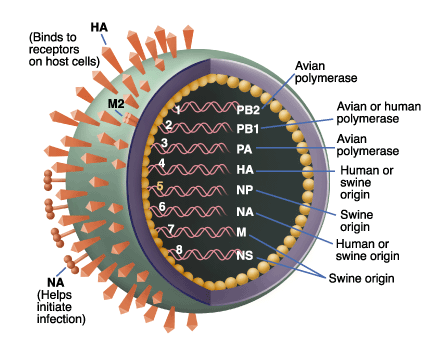
The report also shows that each bit of the current virus's DNA had been circulating on its own and primarily in pigs for years before combining to form the virus responsible for the current pandemic. Some genes have been in pigs for decades. "Across the genome, this is something that came from pigs," Worobey says.

Some of these DNA segments came from a North American swine influenza virus, which itself is made of bits of avian, human and swine influenzas (called a triple-reassortant strain). Other segments came from Eurasian swine with avian virus components. The combination of the triple-reassortant strain from North America and the avianlike strain from Eurasia probably happened as live pigs were transported between North America and Eurasia, the authors say.

"We can do all the surveillance we want in humans, but if we really want to prevent pandemic influenza..., a fundamental change in efforts on the animal health side has to be made," Perez says.
On the same day the new report appeared, the World Health Organization classified the H1N1 outbreak as a pandemic, defined as showing sustained person-to-person transmission in many parts of the world.

WHO Director-General Margaret Chan said that the organization is raising the alert level after determining that flu cases are now showing up in people who didn't bring it from another region and weren't in contact with such travelers. "Further spread is considered inevitable," Chan said in a news conference.

"This does not mean that there is any difference in the level of severity of the flu," he said. Rather, the pandemic label "is important because it does send the strong message that the virus is here, it's in all likelihood here to stay, and it's important that we continue our aggressive efforts to prepare and respond."

So far no decision has been made to mobilize pharmaceutical companies to start mass-producing vaccines aimed specifically at the novel H1N1 virus. But preliminary steps to make that a seamless move have already been taken.

for more information watch this video


Download Merck Veterinary Manual (8th Edition) free


The Merck Veterinary Manual (8th Edition) is the single most comprehensive reference for animal care information! The Merck Veterinary Manual (MVM) has served veterinarians and other animal health professionals as a concise and reliable animal health reference for over 50 years.


MVM has more than doubled in volume to accommodate advances in scientific knowledge and the expansion and specialization of the veterinary profession over the years. The 9th Edition MVM reflects both the remarkable advances in veterinary science and the emergence of new pathogens and new diseases since the publication of the 8th edition of the Manual:

• Every chapter has been carefully reviewed and either revised or rewritten as needed.
• In addition, more than 30 new chapters or subchapters were added to address emerging diseases (eg, West Nile encephalomyelitis, chronic wasting disease, Lechiguana, Nipah virus infection, and postweaning multisystemic wasting syndrome, to name a few), and to better cover advances in diagnosis and treatment (eg, imaging techniques, pain management, ophthalmic emergencies).
• Expanded coverage of specialty fields such as cardiology, neurology, ophthalmology, toxicology, and emergency medicine has been undertaken, as well as reorganization and expansion of the section on exotic and laboratory animals to reflect the increasing popularity of exotic pets—and to highlight their potential to transmit zoonotic diseases.
• The pharmacology section has been strengthened with the addition of chapters on chemical residues and veterinary dosage forms and delivery systems.
• The table of zoonoses continues to grow; we have added information on clinical manifestations in humans, as veterinarians continue to be at the forefront of control of zoonotic diseases and protection of public health.


download links :

part one

part two


is avocado poisonous ?


is avocado poisonous ?
is it poisonous especially to Dogs ??!


no. Dogs can eat quite a bit of avocado without problem. The pits are mainly a problem if they are swallowed whole and end up becoming and obstruction. Too much avocado = bad diarrhea.
Here's a quote from Dr. Mark Grossman: Avocado does contain the toxin persin. The leaves, fruit, bark, and seeds contain the toxin. In dogs and cats however, it does not seem to be as much of a problem as in cattle, horse, goats, rabbits, birds and fish.

Signs including vomiting, diarrhea, death, inflammation of mammary glands of rabbits, goats, cattle, and horses are seen. As well as cardiac failure in goats with respiratory distress, generalized congestion, fluid accumulation around the heart.
A few cases of dogs becoming sick exist but they have to consume large amounts.

In other words - don't feed your goat avocado! Dogs - OK.
This has also come up because of a popular new food called Avoderm. Dasuquin also has avocado in it. It's OK. By all measurements, Avoderm appears to be a good food. Don't let the avocado part of it worry you